Monday, 19 September 2011

WWLB082


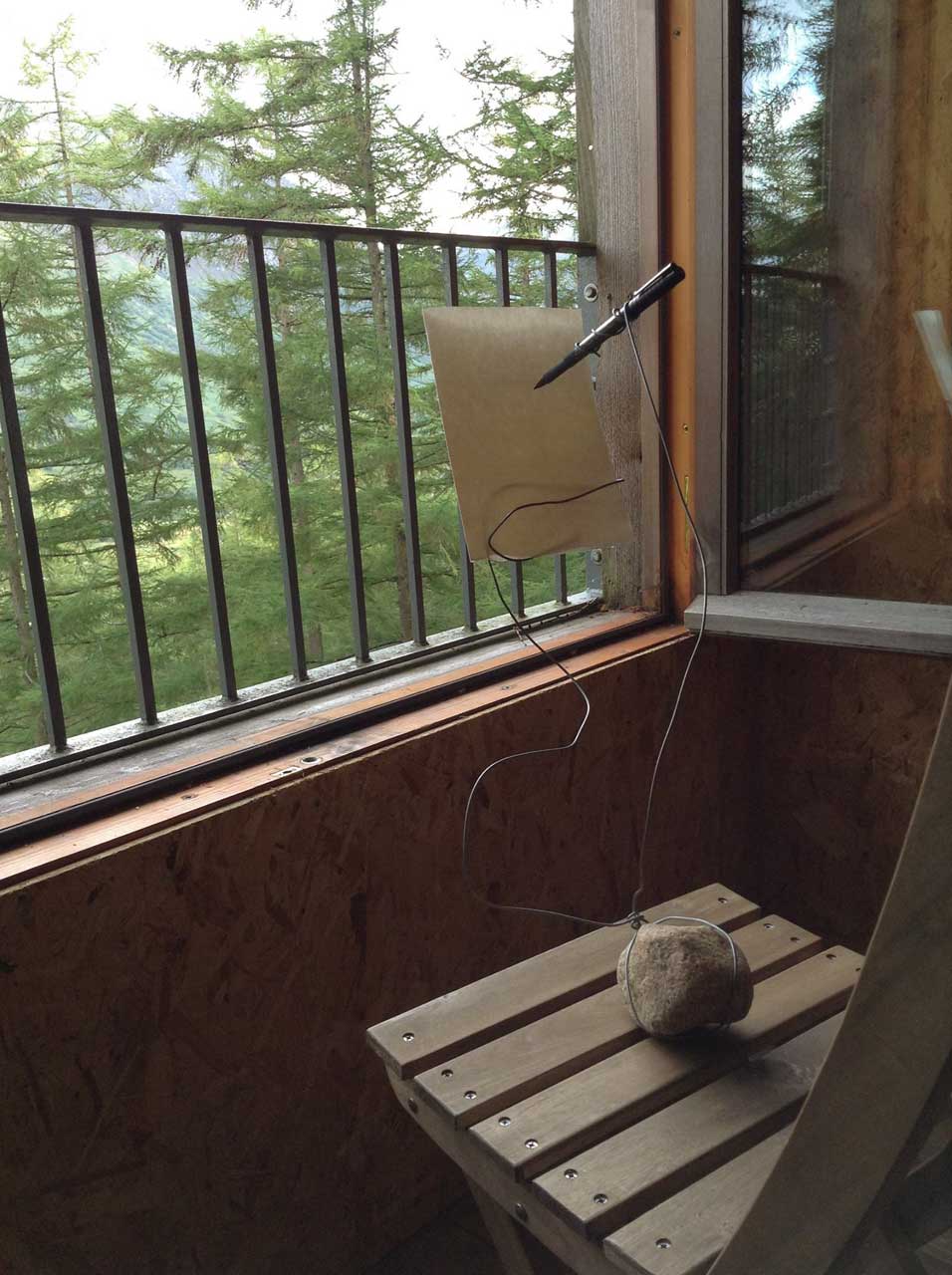
Alec Finlay's WorldWide LetterBox number 82 has been installed at Outlandia. Over the next few years Alec is placing 100 letterboxes at sites around the globe with each box protecting a rubber stamp circular poem. WWLB082 contains a circular poem made specifically for Outlandia. More information


All photos by London Fieldworks

Tuesday, 2 August 2011

Bram Thomas Arnold: Walking Home


Below are edited notes from my first three days at Outlandia. I went to reopen the project Walking Home which is forming the foundation of my PhD research at Oxford Brookes University.


OUTLANDIA,
12 / 05 / 2011.
‘“Concrete turns to Chalk dust, London fades” reads the first postcard in the Walking Home series. Out here London faded, but not to Chalk dust, here it faded to Spaghnum Moss and little rivers, bluebells and a slight touch of winter. And the grand soft evening, rain falling straight down, only slightly to the side like. But the feeling was the same. That deep, tense, exhaustion falling off, flaking like sun burn on a train journey across coasts.’

13 / 05 / 2011.
‘The camping position was not perfect. Really, it was aggressively, not perfect. It was damp and cramped, sloping, and all for the first time in a long time. Slipping into a crumpled damp corner of the tent, I slept just a bit, and kept on. I realised for the first time I had no real food with me. A useless stove, and no matches.’

14 / 05 / 2011.
‘Saturday morning and after better sleep. One of those secret campsites I’ve developed a knack for finding. Just under the eaves of a deep pine wood, years of needles forming a deep mattress and I, I could have been in Somme Vesle again somewhere, half way across northern France, walking to Switzerland, the day after the long rain. I am trying to use this week to develop parallels of sensation, echoes in time and that style of living again. Today I am scheduled to walk, away up the glen, to camp in a corrie the other side of a mountain.’ 


Resting Place (After Somme Vesle)
Tent, cremated remains, polkadot handkercheif, pine forest

photo by Bram Thomas Arnold

Thursday, 5 May 2011

Anna Keleher: Journey into the Far Distant Present


[ M]y short time at OUTLANDIA was a privilege and I was bowled over by the beauty. OUTLANDIA is patient, kind, vigilant and harmonious. I had an intensely rewarding day. It is a place with a future  Packing with a headache in spitting rain was a challenge. My mini-sled took an age to pack. I discarded almost all essential items, finding space only for oatcakes, nuts, raisins, water, mint tea, audio recorder, sketch books + furry cover, black pen, cotton rug. Using my black rain jacket as a tarp against the rain, I tied the bundle onto my sled with slender guy ropes and plaited baling twine. 

My barefoot journey to OUTLANDIA followed The Peat Track; a path with an intimate knowledge of sleds. Helped by gravity the ancient clods must have descended Cow Hill on sleds to be used as fuel in the homes and workshops  of the Glen. 

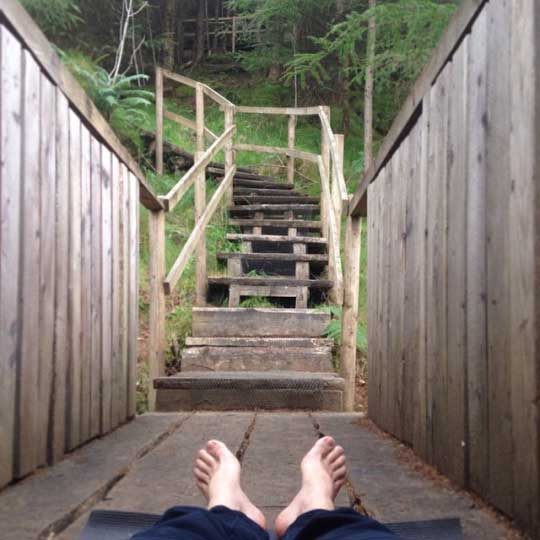
I loved walking the boardwalk over the dark hillside of larch, sitka spruce and damp moss and crossing the bridge into an interior that is dry, welcoming and alive.

The forest boardwalk acts as a lure, enticing unwary travellers into the abode of OUTLANDIA. In this way many inquisitive visitors arrive at OUTLANDIA. And so it was during my residency that a Scandanavian family arrived as I was data gathering from ancient times. I incorporated the interruption into my journey and their chatter led me along a straw path over a glacier to a group of  “original people” and their reindeer. I think they influenced the outcome.

Extracted from the artist's blog: www.annakeleher.com (audio/geopark blog)


All images by Mark Keleher


Saturday, 5 February 2011

Small Projects 2011 Shortlist

Outlandia has been shortlisted for The Architects' Journal Small Projects 2011

OUTLANDIA: PROJECT DESCRIPTION By Malcolm Fraser.
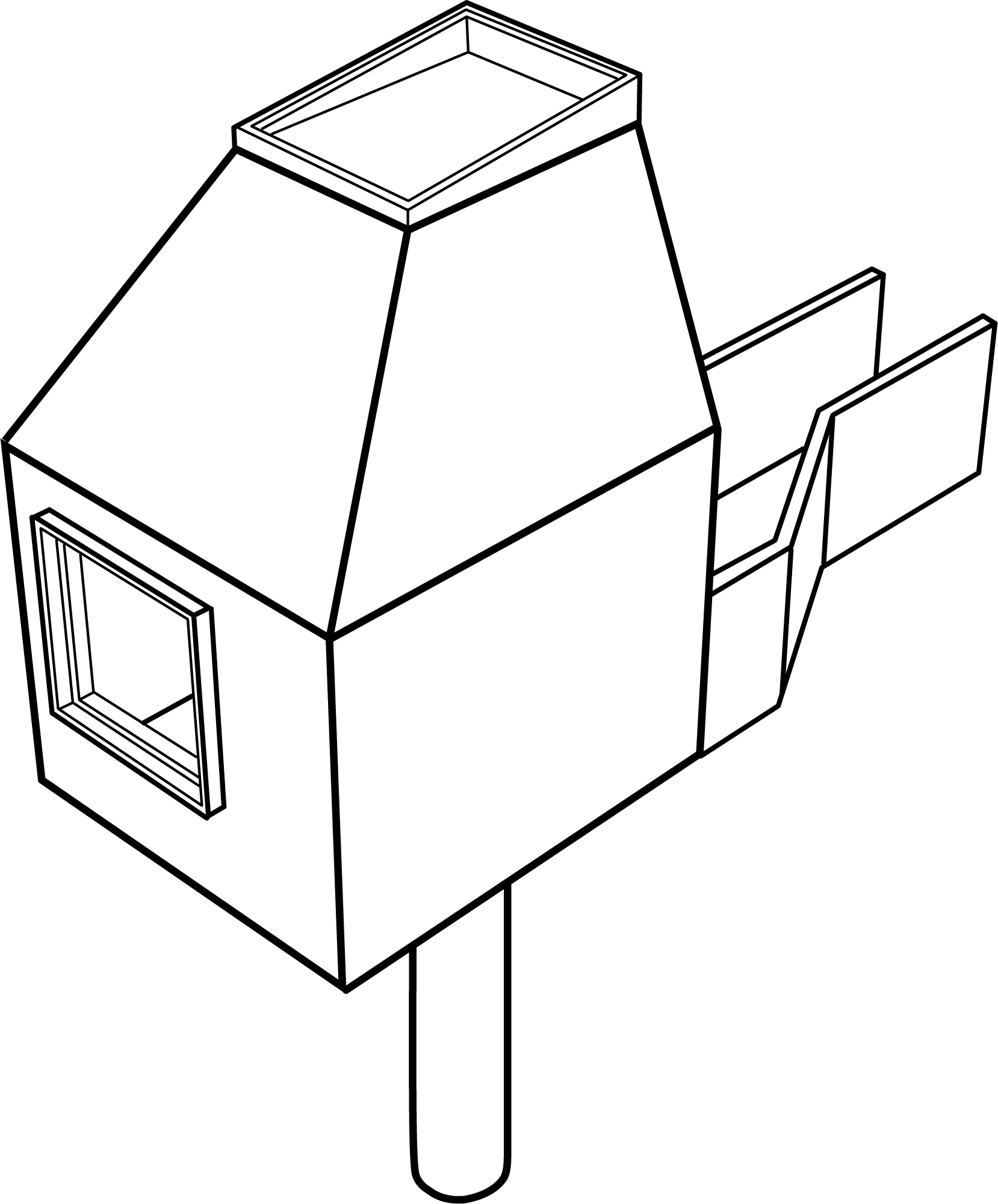
The Project Brief was nice and loose: an artists’ fieldstation in Glen Nevis, to allow and encourage creative interaction between artists and the land, its history and people. The site was even looser: somewhere in Glen Nevis. Where, exactly, grew out of a complex negotiation with partners, landowners and the local authorities, which brought to the surface some interesting tensions – a portion of the climbing fraternity, for instance, believes that hills should be for serious craggies only, and that artists should be kept away. On the ground, the choice of site grew out of long crawls through wet undergrowth and up wooded slopes, in clouds of midges and carpets of pine needles, in search of natural and human drama. The site chosen is full of it. Sitting half-way up the opposite side of the Glen to Ben Nevis, a visitor approaches Outlandia through the path we cut through the dense woods behind, descending out the musty dark of the trees into a big view which, from dark-to-light and framed by old, tall larches, opens-up across the Glen to the shoulder of the Ben. The view of great nature dazzles, but we soon start to see the multiplicity of human interaction with it: the routes threading across the view, from the main road and West Highland Way along the foot of the Glen to the tourist route up the Ben, with its strings of tiny bobbling hats working their way up the hill; the car parks, caravan parks and visitor centre, places of the modern tourist trade; the old mills and older burial mounds, traces of more ancient useage; and the great industrial aluminium smelter across the Glen and the hydro that powers it. Nothing could be further from the idea of the Highlands as “unspoilt wilderness”. We have long been part of this landscape, and it seems unlikely that any artists making work for, from or aound Outlandia would fail to enjoy and illuminate the tensions around nature, industry, tourism and heritage. The building itself sits out from a 45 degree slope: a treehouse, part-built out the trees cut down to form the site, entered across a bridge from the slope behind; a simple box, leaning-out into the view with big windows opening-up to it. Part of the building of it was a low-impact, eco-friendly use of material recovered from the site; part the opposite, high-impact and hairy landings of concrete, for the foundations, from a helicopter. Construction was part-joinery, part-forestry and part-mountain rescue, with a local contractor who nicely combined all three, and an unusual set of Risk Assessments.

Sunday, 19 September 2010

OUTLANDIA LAUNCH

The Outlandia project was finally launched on September 19th 2010 as part of The Great Glen Artists Airshow, an event organised by The Arts Catalyst in partnership with HICA (Highland Institute of Contemporary Art) and London Fieldworks. London Fieldworks worked with Edinburgh based Malcolm Fraser Architects to design a multi-purpose platform for the use of local and invited artists in Glen Nevis. The original proposal was in response to an invitation from the Highland Council to create a lasting contemporary art legacy for the Year of Highland Culture. Click on images below to enlarge.
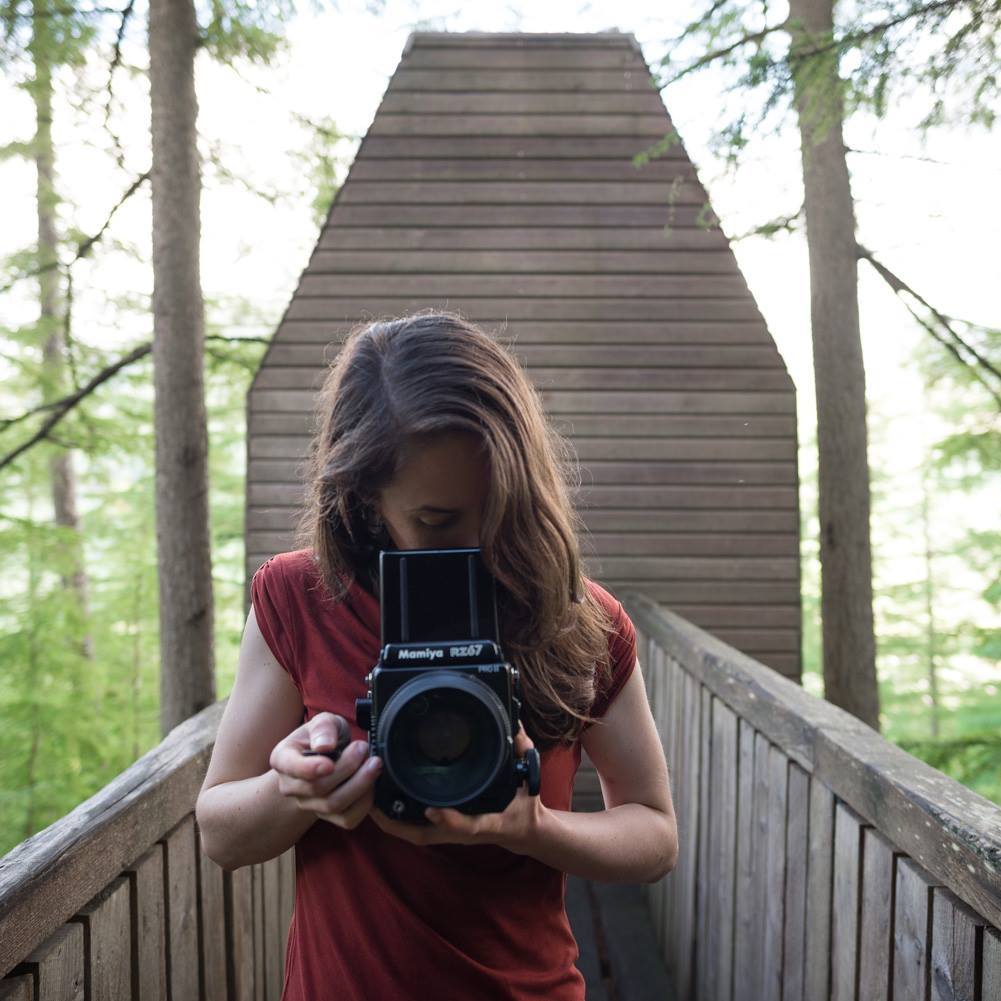
The studio was constructed by local builder Norman Clark and is accessible from the Peat Track to Fort William via a 1/4 mile larch boardwalk built by Dave John and his students from the Environmental Conservation group at Lochaber College.
The Artist, Adam Dant was commissioned to make an aerial map (A Journey Through the Great Glen to the Library of Outlandia) charting the journey from The Highland Institute of Contemporary Arts (HICA) near Inverness, to Outlandia near Fort William. Complimentary to the map, the interior of Outlandia has been transformed by Dant into a place for the "categorisation of knowledge and observations" in the style of the Scottish Enlightenment, a trompe l'oeil library dubbed the "Bibliotheque Outlandia". Visitors to the library can inscribe their own titles onto the spines of the books. 
All photos by Kristian Buus

Thursday, 16 September 2010

BIBLIOTHEQUE OUTLANDIA

Adam Dant installs his trompe l'oeil library to launch Outlandia as part of the Arts Catalyst Great Glen Artists Air Show. A place for the "categorisation of knowledge and observations" in the style of the Scottish Enlightenment. Click on images below to enlarge.
All photos by London Fieldworks

Sunday, 22 August 2010

THE ROAD NORTH

"The road north is a word-map of Scotland, composed by Alec Finlay & Ken Cockburn as they travel through their homeland, guided by the Japanese poet Basho, whose Oku-no-Hosomichi (Narrow Road to the Deep North) is one of the masterpieces of travel literature. Ken and Alec left Edo (Edinburgh) on May 16, 2010 – the very same date that Basho and his companion Sora departed in 1689 – and when they return, on May 16, 2011, they will publish 53 collaborative audio & visual poems describing the landscapes they have seen and people they have met." Source: the road north blog
Outlandia was their destination on 22nd August, 2010. Follow their progress week by week, and read about some of the places that Basho leads them to on the road north blog. Click on images to enlarge.
photos by Kristian Buus & London Fieldworks